Will your Boston heating bill rise this winter? Start with what heats your home.
Oil, gas and electric heating face different winter outlooks. Here’s how Greater Boston households can check their own costs, make useful changes and find available help.
By Boston Dwelling · Published · 4 min read
Two neighbors can face very different winter bills. One orders heating oil. Another pays for gas. A third uses electricity, but the cost depends partly on whether that powers resistance heat or a heat pump.
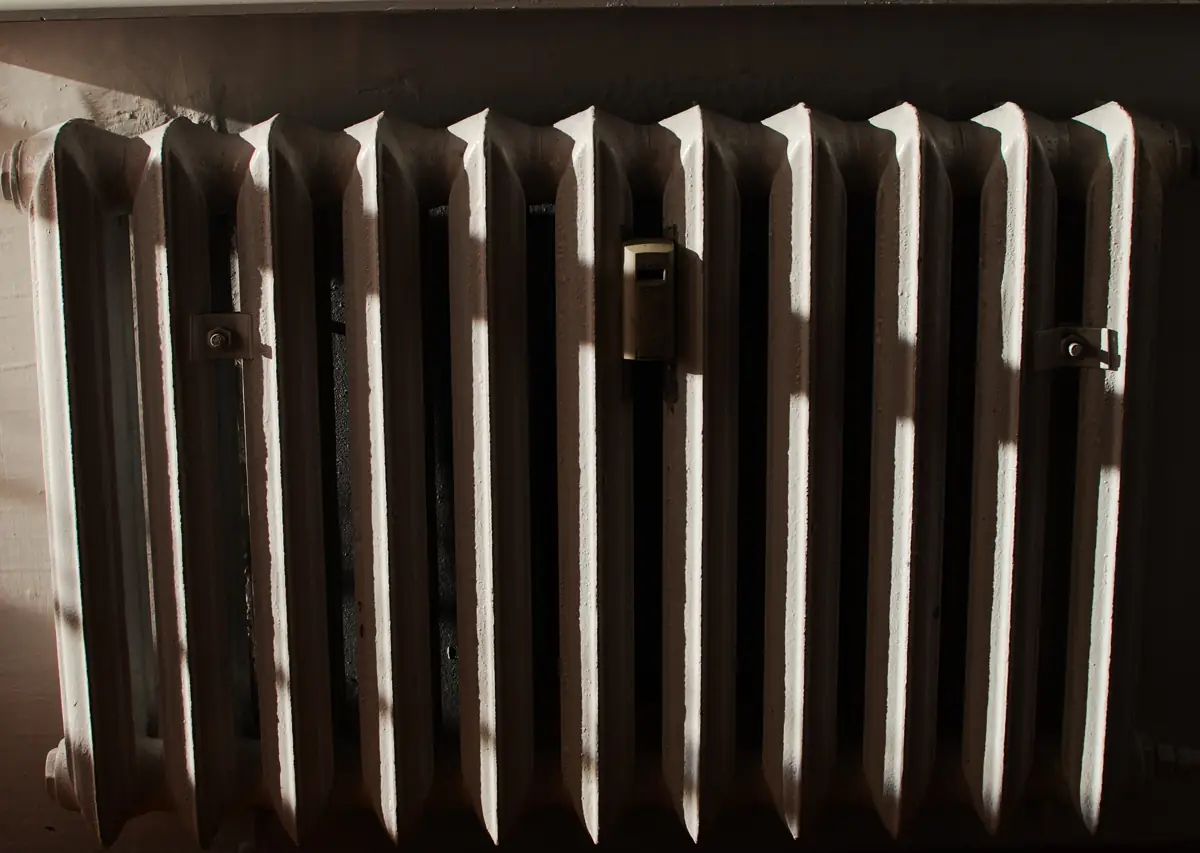
A room radiator, photographed November 25, 2020. Equipment illustration; the source does not identify a Boston location. Photo: Tarasna0922 · Source: Wikimedia Commons · CC BY-SA 4.0 · Resized for web; preview thumbnails may be cropped
That makes “heating bills are going up” an incomplete guide to your budget. The useful questions are what heats your home, how much energy it uses, and which charges appear on your bill.
The federal Energy Information Administration released its winter outlook on October 6. Its forecast points toward higher spending for oil-heated households and lower spending for gas-heated households nationally. Greater Boston residents should treat that as context, then check their own numbers.
The national forecast is a starting point
EIA forecasts the following changes for November 2026 through March 2027 compared with the previous winter:
National winter spending forecast by heating fuel
United States · Observed November 2026-March 2027 versus previous winter; forecast released October 6, 2026 · Illustration / estimate · Values in percent
Heating oil
Electricity
Natural gas
Propane
Show the exact values
| Category | Value |
|---|---|
| Heating oil | +21% |
| Electricity | +4% |
| Natural gas | -9% |
| Propane | -3% |
U.S. averages, not Boston household forecasts. Electricity spending includes non-heating uses. Different homes and equipment make these rows unsuitable for estimating savings from switching fuels.
Source: U.S. Energy Information Administration, Mixed outlook for energy expenditures this winter (October 7, 2026 summary of October 2026 forecasts)
These are U.S. averages, not predictions for a Boston apartment or Massachusetts house. Electricity expenditures include uses beyond heating. Different homes and equipment also make the rows unsuitable for estimating savings from switching fuels.
The forecast assumes a warmer Northeast winter than last year. That matters: a higher unit price can be partly offset by using less fuel. A cold spell, drafty windows or a change in thermostat settings can pull your household in the other direction.
Oil: check the delivery price before the tank runs low
Massachusetts’ surveyed average retail heating-oil price was $6.12 per gallon on October 5. At that price, an illustrative 100-gallon delivery costs $612 before any additional charges.
What an illustrative oil delivery costs
Delivery quantity
100 gallons
Statewide surveyed price
$6.12 per gallon on October 5, 2026
Illustrative cost
100 × $6.12 = $612
Source: Massachusetts Department of Energy Resources, Massachusetts Home Heating Fuels Prices (October 5, 2026 statewide retail heating-oil survey)
That calculation is a snapshot, not a prediction of your winter spending. Your supplier’s quote, delivery quantity and contract terms may differ, and the statewide average is not a Greater Boston-specific price.
When comparing suppliers, ask for the delivered price, minimum order and any fees. If considering a fixed-price arrangement, read its terms rather than assuming it guarantees the lowest cost.
Gas: supply is only one part of the bill
A lower national gas forecast does not guarantee a lower local bill. Massachusetts gas bills include supply and delivery-related charges. Check the applicable utility, rate class and effective dates rather than substituting a wholesale gas price for a household rate.
There is also a pending local change to watch. National Grid’s January 2026 gas rate proposal estimates an average winter monthly bill increase of 8.4%, approximately $24, for residential Boston Gas customers if approved. The utility says new rates would be billed beginning January 1, 2027, following a DPU decision due by November 30.
As checked October 9, those figures describe a proposal, not an enacted increase. They concern a portion of distribution charges and cannot simply be combined with EIA’s national percentage to forecast your bill.
Electricity: find out what equipment you have
Electric resistance heaters generate heat using electricity. Heat pumps move heat, so equipment performance matters alongside the electricity rate.
If you rent, ask the landlord which system serves your unit and whether you control it. “Electric heat” alone does not answer those questions.
For heat pumps, Mass Save recommends a steady, comfortable temperature rather than frequent adjustments or large nighttime setbacks. Keep filters clean and airflow clear, and follow the system’s instructions. Advice intended for a furnace is not automatically appropriate for a heat pump.
Start with manageable steps and available help
Mass Save recommends keeping heat inside by addressing drafts and keeping radiators and vents unobstructed. Renters should report building problems and coordinate changes with the landlord. Major insulation or equipment work requires more planning than moving furniture away from a vent.
An eligible no-cost energy assessment can identify improvements. Mass Save’s renter guidance includes options for different building sizes; participation and incentives depend on the property and program.
Assistance deserves a separate check. HEAP applications opened October 1 for the November 1, 2026 through April 30, 2027 heating season. Eligibility generally requires household income no higher than 60% of estimated state median income, adjusted for household size.
A separate Massachusetts program offers eligible households using No. 2 heating oil an estimated one-time benefit of up to $680. Income must be above 60% but below 100% of state median income. Applications are scheduled to open in December 2026; the interest form is not an application.
Your heating system changes the next question
| System | What to check first |
|---|---|
| Heating oil | Delivered price, minimum order and fees |
| Natural gas | Applicable supply and delivery charges; approved effective dates |
| Electric resistance | Electricity rate and actual winter usage |
| Heat pump | System settings, filters and airflow; relevant utility rate |
A practical checklist. Use your own bills and equipment instructions; national averages are not an individual forecast.
Three things to do this week
- Identify your heating system, who pays for heat, and last winter’s usage.
- Check current supplier or utility charges, then choose efficiency steps suited to your equipment.
- Review assistance eligibility and application timing before winter bills become urgent.